

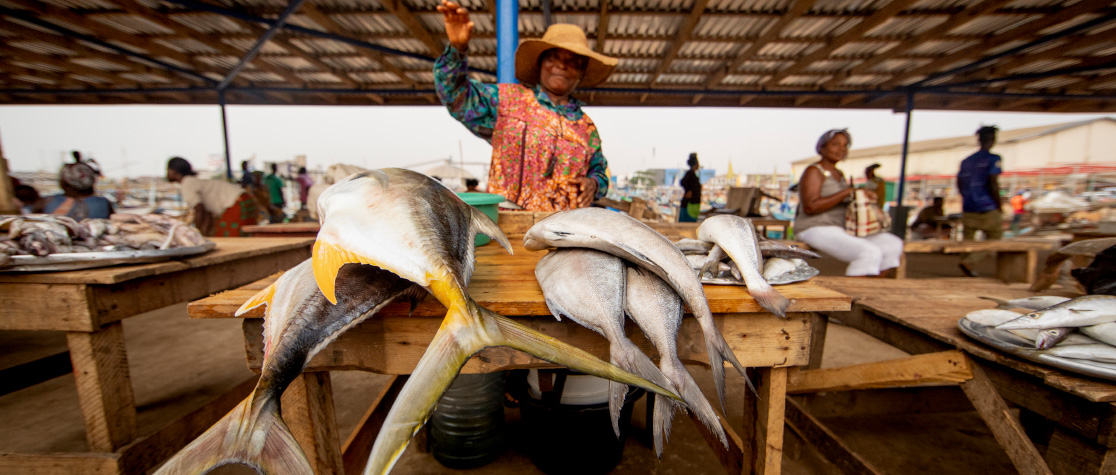
World Tuna Day highlights how fisher collaboration improves practices and reduces bycatch
Tuna is a vital source of food and nutrition for millions of people around the world and demand is on the rise.
World Tuna Day recognizes the need to protect marine biodiversity and strengthen science-based conservation efforts to ensure a sustainable future for fisheries and the communities that depend on them.
Skipper workshops bring together scientists, fishers, and crew to develop bycatch mitigation tools and techniques through a participatory approach.
FAO, and the International Seafood Sustainability Foundation or ISSF, with funding from the Global Environment Facility, are working together to tap into the know-how of tuna fishers, while giving them a say in how to balance the demands of the sector with sustainable practices.
Significant progress has been made. In 2017, only 75 percent of the tuna catch came from healthy stocks free of overfishing. Today, it is estimated that 99 percent of commercial tuna catches come from stocks that are scientifically assessed to be biologically sustainable. For instance, Atlantic Bluefin tuna, once absent, are now common again in southern England and Ireland.
The skipper workshops aim to find practical solutions to improve fishing operations to reduce impacts on vulnerable species such as manta rays, sharks, and seabirds, as well as minimize overall marine ecosystem impacts.
The International Seafood Sustainability Foundation (ISSF) is a global coalition of scientists, seafood companies, and environmental organizations that undertakes science-based initiatives to continuously improve the sustainability of global tuna fisheries.
ISSF has organized the workshops since 2009, working with a range of partners– including collaborations with FAO and the Common Oceans Tuna Project – as part of the organization’s work to develop practical solutions that reduce impacts on vulnerable marine species and marine habitats.
“Working together is the only effective way to ensure continuous improvement in the sustainability of fishing operations,” says Joe Zelasney, Project Manager of the Common Oceans Tuna Project.
“Collaboration enabled by skipper workshops and trials worldwide has cemented trust between fishers and scientists and produced effective solutions.”
World Tuna Day is an opportunity to celebrate efforts to balance growing production with sustainability.
Each year tuna fisheries produce nearly 6 million tonnes of nutritious, high-quality animal protein, with a total annual market value of 45 billion dollars.
Fishing fleets vary widely in size and their operations, and the skipper workshops recognise this diversity by being made available to fishers across ocean regions.
The ISSF skippers workshop series has run 196 workshops in 48 locations, engaging more than 5800 participants worldwide.
“Skipper workshops are one of the most effective ways to translate science into action at sea,” said Hilario Murua, Director of Science at ISSF.
“By working directly with fishers and crew, we can test and refine practical solutions that reduce bycatch and improve fishing practices in real-world conditions.”
Skipper workshop brings fishers and managers together in Ghana
One of the recent skipper workshops on the purse seine fleet was held in Tema, Ghana in 2025.
Ghana’s fishing fleet plays a vital role in the country’s economy and tuna production supports the livelihoods of many coastal communities in West Africa.
The Ghana Tuna Association and Ghanaian government have been working together to implement sustainable best practices. The workshop brought fishers, crews and managers together to discuss ways to protect vulnerable species from bycatch.
Frank Aihoon, the president of the Ghana Tuna Association, said: “It’s very educative and it will help the skippers and crew on board the vessels learn to improve fishing operations which is very important. We consider sustainability as a main goal in the fishing industry.”
Kwame Ademako, head of fish procurement, warehouse, logistics for seafood producer, Thai Union, said the workshop strengthened commitments from vessel owners, managers and crew members to change their practices.
“It was a good idea bringing the management as well as skippers and also the crew members to this workshop to give a wholesome education to all of them and to ensure that they also become more committed to a cause to ensure that sustainable sourcing of tuna.”
The Common Oceans Tuna project is a global partnership led by the Food and Agriculture Organization and financed by the Global Environment Facility.
It supports sustainable tuna fisheries that ensure responsible management and biodiversity conservation in areas beyond national jurisdiction (ABNJ) and highlights the crucial link between protecting tuna populations and ensuring economic stability, food security and long-term resilience, particularly for nations in the Pacific region.
Source : FAO


