Fisheries and aquaculture are a key source of food, nutrition and livelihoods in Africa. But as demand for aquatic foods continues to rise, supply is struggling to keep pace.
The 2026 edition of The State of World Fisheries and Aquaculture, launched today by the Food and Agriculture Organization of the United Nations (FAO) during the Our Ocean Conference in Mombasa, Kenya, finds that global production of aquatic animals and algae totalled 235 million tonnes in 2024. Aquatic animal production alone hit a record 195 million tonnes, driven largely by the rapid expansion of aquaculture. Despite this growth, challenges remain in meeting demand in regions such as Africa.
Africa has the lowest availability of aquatic animal foods per capita globally, yet these foods provide a significant share of animal protein across the continent – about 19 percent on average.
“Across Africa, communities rely on aquatic animal foods for nutrition, and in some countries these foods provide as much as 54 percent of animal protein,” says Abebe Haile-Gabriel, FAO Assistant Director-General and Regional Representative for Africa. “Their production also supports jobs, highlighting their critical role in the blue economy, especially for low-income and vulnerable populations”.
Capture fisheries remain central to food supply and jobs
Marine capture fisheries are a leading source of aquatic animals for the entire region, with 7.1 million tonnes produced in 2024. Morocco is the number one producer at almost 1.4 million tonnes, followed by Mauritania, Angola, Senegal and South Africa.
Inland fisheries provide a key source of food and jobs, especially in rural areas and in low-income and landlocked countries. They contributed 3.7 million tonnes of aquatic animals in 2024, a third of all global inland catches.
According to available data, production is unsurprisingly concentrated in countries with major freshwater systems such as river basins and lakes. Among the top five producers, Uganda leads with output of just over 0.5 million tonnes, followed by the United Republic of Tanzania, Nigeria, Egypt and the Democratic Republic of Congo.
Aquaculture is expanding rapidly, offering a path to meet rising demand
Aquaculture accounts for 18 percent of total aquatic animal production in Africa and is expanding rapidly, with strong potential to help meet rising demand and sustain the livelihoods of a growing population.
Globally, aquaculture has been the main driver of growth in aquatic animal production. In Africa the sector is expanding at the fastest rate in the world, growing to over 2.4 million tonnes in 2024, an average annual growth rate of 8 percent since the year 2000 – well above the global average of 5 percent a year over the same period.
Aquatic animal farming is highly concentrated, with the top five producing countries accounting for 90 percent of the continent’s output. The leading producer is Egypt with 1.6 million tonnes in 2024 (66 percent of the regional total), followed by Nigeria, Ghana, Uganda and Zambia.
Amid rapid population growth, demand outpaces supply
Rapid population growth, urbanization, rising incomes and changing consumer preferences are driving increasing demand for aquatic foods across Africa, placing increasing pressure on supply.
While the total per capita availability of aquatic animal foods in Africa has increased over time, it remains the lowest in the world at 9.1 kg per person per year – less than half the global average of 21.1 kg per person per year in 2023.
Around a third of this availability comes from imports, supplementing domestic availability, according to the report. At the same time, Africa maintains a positive trade balance (USD 2 billion) and a net gain in protein (126 000 tonnes), as it exports high-value commodities and imports low-value, yet nutrient-rich, aquatic animal products that support food security and nutrition.
Looking ahead, demand is expected to continue rising. By 2034, Africa is projected to produce around 7 percent of aquatic animals at the global level, with fisheries and aquaculture output growing by 13 percent compared to 2024.
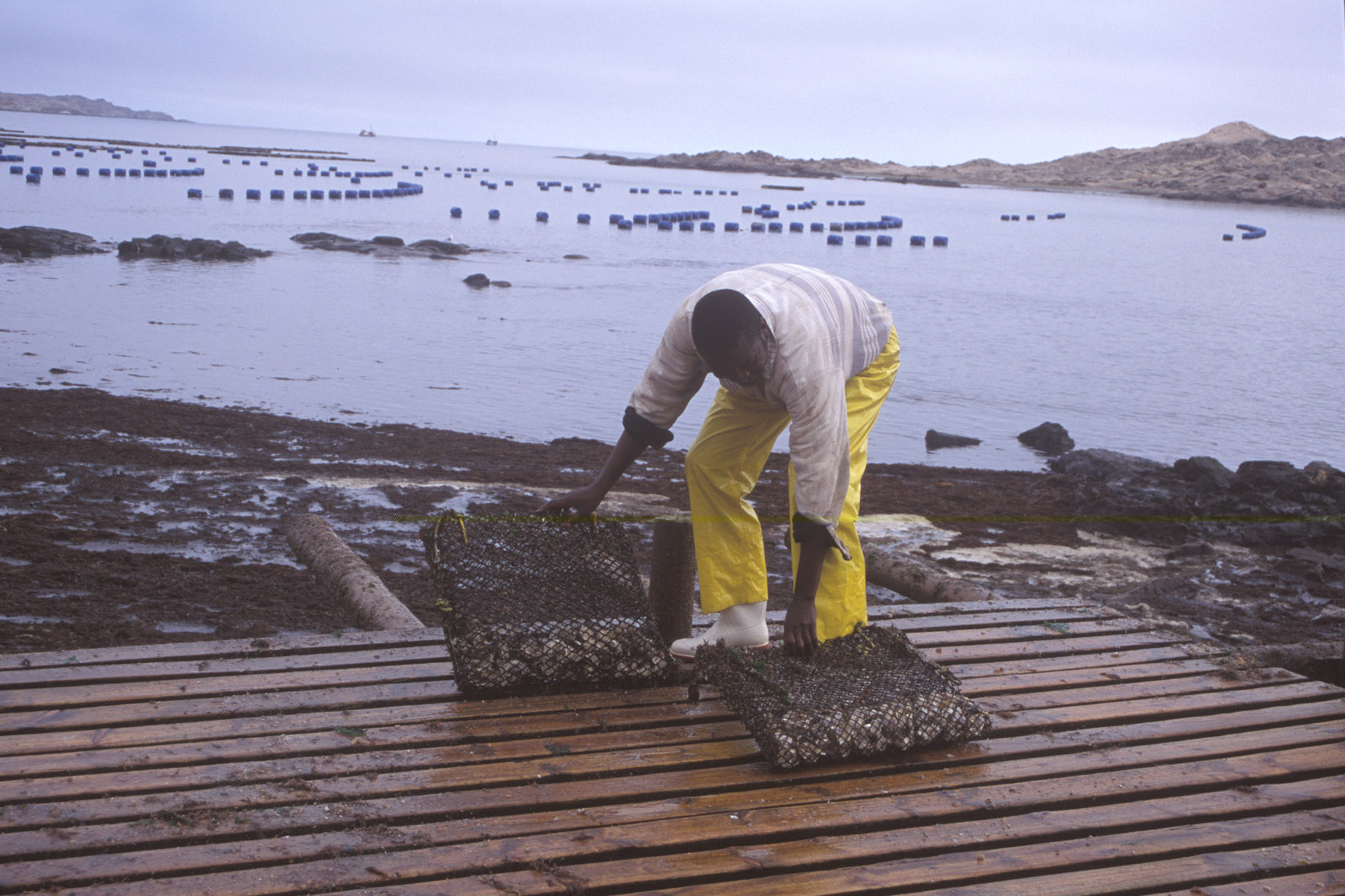
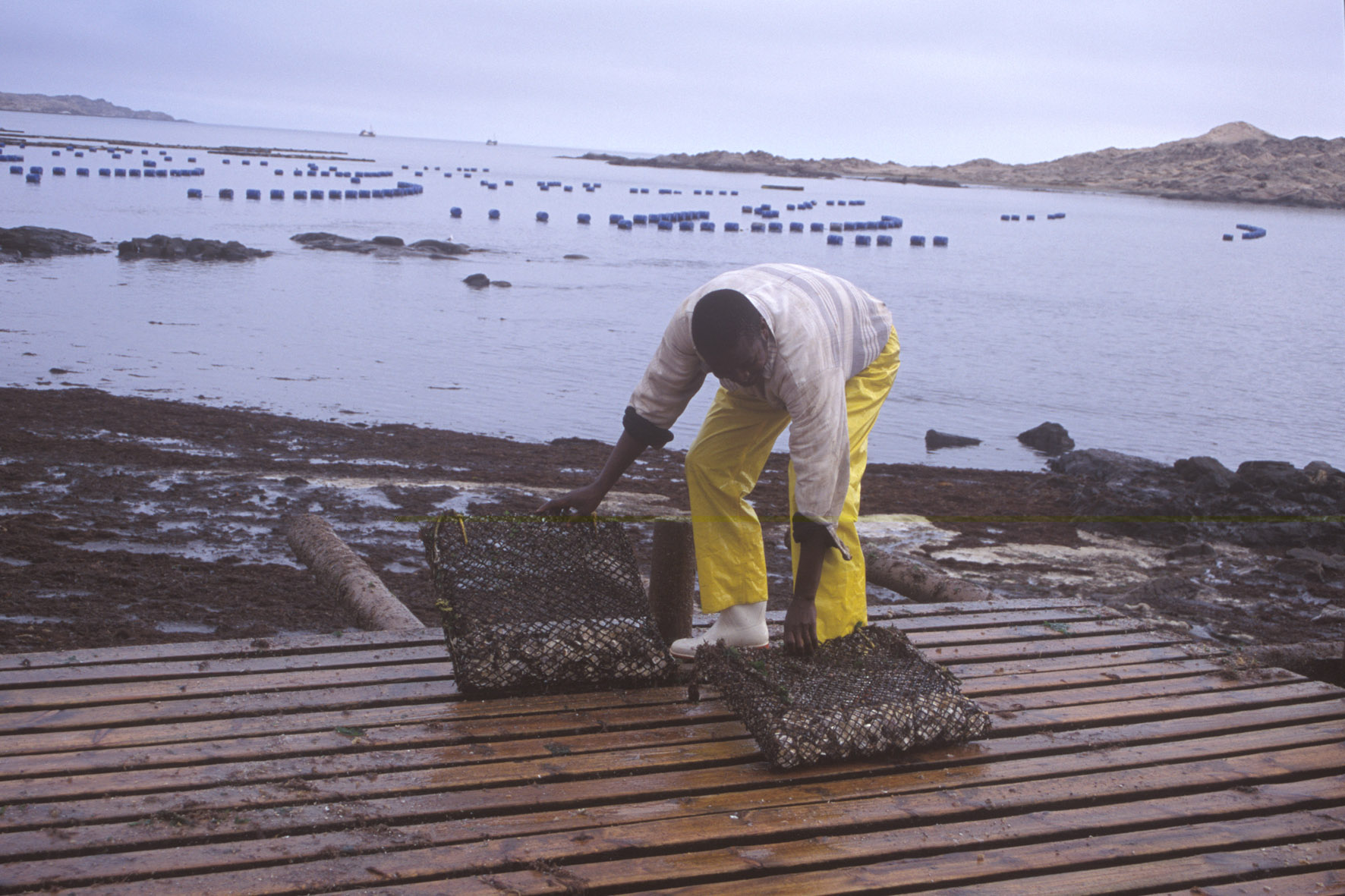
The following photos are general photos of the Namibian fisheries sector, which do not have direct input from an FAO project. The advisor rather acts at the level of the ministry.
Small-scale fisheries sustain communities, and women are at the forefront
Fisheries and aquaculture are estimated to support 600 million livelihoods across the value chain in the world. Of these, 65.3 million people were directly employed in the primary sector in 2024, and around 9 percent were based in Africa, the second largest workforce globally.
Inland fisheries are a major source of jobs, particularly in rural and landlocked parts of Africa, employing 3.2 million fishers and accounting for 63 percent of those employed in fisheries on the continent.
Aquaculture, despite its rapid growth employed 0.6 million people in the primary sector in 2024, compared to a global total of 23.1 million fish farmers employed globally.
Most of those engaged in the sector are small-scale operators. Small-scale fisheries form the backbone of both marine and inland production systems. In Africa, these fisheries are deeply embedded in local economies and food systems, supporting household nutrition, subsistence activities and informal markets. Women play a particularly important role in post-harvest activities such as processing and marketing.
“When accounting for the full value chain, including informal and subsistence activities, the sector supports tens of millions of livelihoods across the African region, both directly and indirectly,” says Abebe Haile-Gabriel. “Strengthening fisheries and aquaculture will be essential to meet growing demand, improve food security and sustain livelihoods across Africa.”
About the report
The State of World Fisheries and Aquaculture is an FAO flagship report that analyses the status and health of global fishery stocks as well as trends in fisheries and aquaculture at the global and regional level, including data on production, trade, employment and availability of fisheries and aquaculture products.
Africa in numbers
1. Production
| Fisheries and aquaculture production (aquatic animals and algae) | |
|---|---|
| World | Africa |
| 235 million tonnes | 13.5 million tonnes or 6 percent of global output |
| Production of aquatic animals | |
| World | Africa |
| 195 million tonnes | 13.2 million tonnes or 7 percent of global output |
| Production of algae | |
| World | Africa |
| 40 million tonnes | 0.3 million tonnes or 0.9 percent of global output |
| Aquaculture production | |
| World | Africa |
| 142 million tonnes of which – 103 million tonnes of aquatic animals – 39 million tonnes of algae |
2.7 million tonnes or 2 percent of global output |
| Capture fisheries production | |
| World | Africa |
| 93 million tonnes of which – 92 million tonnes aquatic animals – 1.3 million tonnes of algae |
10.8 million tonnes aquatic animals or 12 percent of global output |
2. Availability of aquatic animal foods
| Global availability of aquatic animal foods (2023) | |
|---|---|
| World | Africa |
| 171 million tonnes | 13.4 million tonnes |
| Global availability of aquatic animal foods per capita (2023) | |
| World | Africa |
| 21.1kg | 9.1 kg |
3. Employment
| People employed in primary production | |
|---|---|
| World | Africa |
| 65.3 million | 6.1 million or 9 percent of the world total |
4. Trade
| Trade of aquatic animal products | |
|---|---|
| Exports | |
| World | Africa |
| USD 184 billion | USD 8.4 billion or 5 percent of total world’s exports in aquatic animal products |
| Imports | USD 5.9 billion or 3 percent total world’s imports in aquatic animal products |
5. Top producers
| Aquaculture: Top five producers of aquatic animals in 2024 (Million Tonnes) | |
|---|---|
| Egypt | 1.6 |
| Nigeria | 0.3 |
| Ghana | 0.1 |
| Uganda | 0.1 |
| Zambia | 0.1 |
| Marine capture fisheries: Top five producers of aquatic animals in 2024 (million tonnes) | |
|---|---|
| Morocco | 1.4 |
| Mauritania | 0.6 |
| Angola | 0.6 |
| Senegal | 0.5 |
| South Africa | 0.5 |
| Inland fisheries: Top five producers of aquatic animals in 2024 (million tonnes) | |
|---|---|
| Uganda | 0.5 |
| Tanzania | 0.4 |
| Nigeria | 0.4 |
| Egypt | 0.3 |
| Democratic Republic of Congo | 0.3 |
Source : FAO